Persons with disabilities are not objects of pity, not curiosities for the camera and not easy targets online. They are rights-holders, creators, students, workers and citizens. It is time our words, our screens and our laws said so.
A myth is never harmless
Every harmful act against a person with a disability begins with an idea. Somebody once decided that a child with albinism was a curse, a ghost or a source of luck. Somebody decided that a young man with an intellectual disability could not understand, could not choose and could not feel. Somebody decided that a blind woman had no business with a smartphone. None of these ideas is true. Yet each one still shapes how families raise children, how classrooms are run, how employers hire, and today, how people behave behind a screen.
Myths do not stay in conversations. They travel into decisions: who is sent to school, who is given a phone, who is trusted with a bank account, who is believed when they report abuse. In the digital age they travel faster still. A rumour that once moved from one village to the next can now cross the country in a single forwarded message. A mocking video of a person with a disability can be watched thousands of times before anyone asks whether that person agreed to be filmed.
This is why the struggle for disability rights in Rwanda now has two fronts: the street and the screen. We must dismantle the false beliefs that portray persons with disabilities as incapable, helpless, dependent or less deserving of respect. And we must make sure that the digital world, which is fast becoming the place where Rwandans learn, work, pay, vote, worship and connect, is a space where everyone can take part safely, freely and with dignity.
Myths vs Facts
The beliefs below are still heard in homes, markets, schools and comment sections. Each one has a clear factual answer.
| The myth | The fact |
| Albinism is a curse, a punishment or a sign of bad luck. | Albinism is a genetic condition. A child inherits it when both parents carry the gene. It is nobody’s fault and it carries no spiritual meaning. |
| Persons with albinism are ghosts. They do not die; they simply disappear. | Persons with albinism are human beings like everyone else. They are born, grow, age and die like everyone else. This myth has been used to justify horrific attacks in our region. |
| The body parts of a person with albinism bring wealth, power or healing. | This is a deadly lie with no basis at all. It has fuelled killings, mutilations and grave desecration across parts of Africa. Spreading it, even as a “joke”, puts lives at risk. |
| Albinism is contagious. | Albinism cannot be caught through touch, food, sharing a cup or living together. |
| Persons with albinism are less intelligent. | Albinism affects pigmentation and often vision. It does not affect intelligence. With large print, good seating and screen magnification, learners with albinism succeed at every level, including doctorates. |
| Persons with intellectual disabilities do not understand what happens to them, so they cannot really be hurt. | Persons with intellectual disabilities feel humiliation, fear and pain like anyone else. They may need information in simpler forms, but they understand far more than they are given credit for. |
| Persons with intellectual disabilities cannot make their own decisions. | With accessible information and supported decision-making, they can make choices about their lives, money, relationships and online activity. Their right to do so is recognised in international law. |
| The internet is not for persons with intellectual disabilities. It is too dangerous for them. | The internet is a right, not a privilege. Research shows it can reduce isolation and open doors to learning and friendship. The answer to online risk is safety education and better design, not exclusion. |
| Blind people cannot use smartphones or computers. | Screen readers, voice commands and magnification let blind and low-vision people browse, message, bank and work online. What stops them is inaccessible design, not blindness. |
| Persons with disabilities are a burden who mainly need charity. | Persons with disabilities are workers, parents, artists, entrepreneurs and leaders. What they need is equal access, fair opportunity and respect for their rights. |
Pity is not respect
Not every harmful attitude looks hostile. Some of the most damaging ones look kind. “Poor thing.” “Let me do it for you.” “How brave of you just to come out of the house.” This is pity-based or biased empathy, and it is a quieter form of discrimination.
Pity places a person with a disability beneath the person offering it. It assumes inability before asking. It turns a human being with plans and opinions into an object of sympathy. Online, it takes the shape of viral videos that film persons with disabilities receiving gifts, charity appeals that use a child’s face without consent, and captions that call ordinary achievements “inspiring” simply because the person is disabled.
Pity also excuses exclusion. If a person is seen as helpless, nobody thinks to make the school website accessible, to give her a phone of her own, or to ask his opinion at the community meeting. Respect asks different questions: What do you need? What do you think? What would you like to do?
Persons with disabilities do not ask to be admired or rescued. They ask for what every Rwandan is promised: equal rights, equal opportunities and equal dignity.
The numbers: Rwanda and the world
Persons with disabilities in Rwanda are less than half as likely as other Rwandans to use the internet: 6% against 14%, according to the 2022 census. Rwanda has made remarkable digital progress, but the figures show that persons with disabilities are being left on the wrong side of the divide.
| Category | Rwanda | Global / regional |
| Persons with disabilities | 391,775 people aged 5 and above, 3.4% of that population (NISR, 2022 census). Children under 5 were not counted. | About 1.3 billion people, or 16% of the world, live with significant disability (WHO) |
| Persons with albinism | 1,864 people aged 5+ in the census, about 1 in 7,106 Rwandans (PAMJ). New estimates suggest the true figure may exceed 5,000 (The New Times) | Between 1 in 5,000 and 1 in 15,000 people in sub-Saharan Africa (UN News / WHO) |
| Persons with a seeing disability | 158,712 people, 31% of all persons with disabilities and the largest single group (NISR) | At least 2.2 billion people have a near or distance vision impairment (WHO) |
| Persons with a cognitive (remembering or concentrating) disability | 73,531 people aged 5+ (NISR) | No single global count; disability surveys rarely separate intellectual disability |
| Internet use | 6% of persons with disabilities aged 10+ used the internet, against 14% of persons without disabilities (NISR) | 74% of the world, about 6 billion people, was online in 2025; 2.2 billion remain offline (ITU) |
| Mobile phone ownership | 36% of persons with disabilities aged 10+ own a phone, against 48% of persons without; 43.8% among persons with a seeing disability and only 10% among those with a communication disability (NISR) | In every low- and middle-income market GSMA studied, persons with disabilities were less likely to own a phone or use mobile internet (GSMA) |
| Digital literacy | National digital literacy reached 75.2% in 2024 (The New Times), but the headline figure is not broken down by disability | Most internet users worldwide have basic skills; advanced skills such as online safety are far less common (ITU) |
| Basic literacy | 44% of persons with disabilities are illiterate, against 21% of persons without (NISR); 23.7% of persons with albinism have never attended school | Low literacy is a known barrier to mobile internet use for persons with disabilities (GSMA) |
| Accessible websites | No national audit of Rwandan websites is published | 95.9% of the world’s top one million home pages had detectable accessibility failures in 2026, averaging 56 errors per page (WebAIM) |
| Online abuse | No national data on online abuse of persons with disabilities | Studies of people with intellectual disabilities report cyberbullying rates from 5% to 64%, with harassment most common (Clements et al., 2024) |
Three lessons stand out. First, Rwanda’s national progress is real: digital literacy rose from below 10% in 2017 to 75.2% in 2024. Second, that progress has not yet reached persons with disabilities on equal terms, especially those who also face low literacy, rural poverty or communication barriers. Third, we cannot protect people we do not count. Rwanda has no published data on online abuse against persons with disabilities. That silence is itself a warning.
The figures for persons with albinism deserve special attention. Most have low vision, so small text, low-contrast screens and image-based security checks are daily obstacles. Fewer years of schooling mean fewer chances to learn digital skills. And in a region where myths about albinism have led to killings, a leaked photo or a shared home location is not a minor privacy breach. It can be a threat to life.
Why persons with disabilities need specific protection online
Persons with disabilities do not need protection because they are weak. They need it because the digital world was not built with them in mind, and because people who wish them harm know it. Several factors combine to raise the risk.
- Dependence on intermediaries. When a phone screen cannot be read, someone else often reads the messages, types the PIN or manages the mobile money account. Most helpers are trustworthy. Some are not, and the person being helped may have no way to check.
- Inaccessible security. Image-based verification checks, tiny warning text, unlabelled buttons and fast-expiring codes are hard or impossible for blind and low-vision users. When safety features are inaccessible, people are pushed into unsafe workarounds.
- Difficulty recognising manipulation. Australia’s online safety regulator found that many adults with intellectual disability do not recognise online abuse while it is happening, and rarely seek help (eSafety). Abusers exploit exactly this gap: flattery, false friendship and urgent requests.
- Isolation. Many persons with disabilities spend more time online because offline spaces exclude them. A person with few friends is more likely to trust a stranger who seems kind.
- Myths that turn people into targets. Where people believe the body of a person with albinism has value, information about where that person lives, studies or travels becomes dangerous. Online rumours and “jokes” keep these beliefs alive.
- Weak reporting routes. Reporting forms, hotlines and police procedures are rarely available in easy-read, sign language, audio or large print. Victims who cannot report are victims who are never counted.
Protection, then, is not about taking technology away. It is about making technology, services and communities safe enough for everyone to use.
What digital violence looks like
Digital violence is any harm done to a person through phones, apps, social media or online services. Against persons with disabilities it takes recognisable forms.
- Mockery and cyberbullying. Memes, nicknames and comment threads that ridicule the appearance of persons with albinism or the speech and behaviour of persons with intellectual disabilities. Harassment is the most commonly reported form of cyberbullying among people with intellectual disabilities.
- Filming without consent. Recording a person with a disability, often in a moment of distress or difficulty, and posting it for views or laughs. Rwanda’s cybercrime law already punishes taking and displaying pictures or videos of people without consent and in bad faith.
- Exploitation for profit or pity. Using images of persons with disabilities, especially children, in fundraising appeals, begging videos or “charity” content without their consent and without the money ever reaching them.
- Sexual exploitation, grooming and sextortion. Offenders befriend a person online, win their trust, obtain intimate images and then threaten to share them. Research in Australia lists sexual extortion among the common abuses faced by adults with intellectual disability.
- Fraud and financial abuse. Fake prize messages, false job offers, mobile money scams and impersonation of officials or relatives. People who rely on others to read their screen, or who struggle to spot a fake link, are prime targets.
- Doxing and exposure. Sharing where a person lives, studies or works. For a person with albinism, this can expose them to physical danger.
- Hate speech and misinformation. Posts and voice notes that spread superstition about albinism or describe disability as a curse, keeping dangerous myths in circulation.
- Technology control. A partner, relative or carer who takes away a person’s phone, reads their messages or controls their accounts. Studies of women with intellectual or cognitive disability found that perpetrators were most often partners or ex-partners, but also included family members and carers (eSafety).
- Exclusion by design. Government, banking and learning platforms that a blind person or a person with an intellectual disability cannot use. This is not always intended, but it denies people their rights just as surely.
Women and girls with disabilities often face several of these at once. A 2026 study in South Africa found cyberbullying, hacking and hate speech to be the most common forms of technology-facilitated gender-based violence against women with disabilities (Ned et al., 2026).
Rwanda is not without tools. Law No. 60/2018 on the Prevention and Punishment of Cyber Crimes punishes cyber-stalking, online grooming, the publication of indecent material and unauthorised access to data. Rwanda is also a party to the UN Convention on the Rights of Persons with Disabilities, which guarantees accessibility, freedom from exploitation and violence, and access to information. The challenge is making these protections known, accessible and enforced for persons with disabilities.
What must change
No single institution can end digital violence. Every person who shapes a child’s beliefs, a platform’s design or a nation’s policy has a part to play.
Parents and families
- Give children with disabilities their own phones and accounts when they are ready, and teach them online safety the way you teach road safety.
- Ask before you post a photo or video of a family member with a disability. Consent applies to them too.
- Correct myths at home, including the “harmless” jokes.
Teachers and schools
- Include learners with disabilities in every digital literacy and ICT lesson, with large print, screen readers and easy-read materials.
- Teach all learners that mocking a classmate online is violence, not humour.
- Make it easy for a learner with a disability to report abuse to a trusted adult.
Communities and faith leaders
- Speak openly against superstitions about albinism and disability in community meetings and places of worship.
- Welcome persons with disabilities as members and leaders, not only as recipients of charity.
Media professionals and content creators
- Never film or publish a person with a disability without informed consent.
- Drop pity framing. Tell stories of persons with disabilities as experts, professionals and citizens, and let them tell their own stories.
- Fact-check and refuse to amplify myths, even to “debate” them.
Technology companies, telecoms and platforms
- Build to international accessibility standards: screen-reader support, captions, high contrast, simple language.
- Offer accessible alternatives to image-based security checks and short-lived codes.
- Provide reporting tools in Kinyarwanda, easy-read, audio and sign language, and act on reports quickly.
Policymakers and public institutions
- Publish digital access, digital literacy and online-safety data broken down by disability type, starting with the next Labour Force Survey and the national disability census.
- Require accessibility in every public digital service, from Irembo to tax and employment platforms.
- Train police, investigators and prosecutors to receive and handle reports from persons with disabilities.
- Fund organisations of persons with disabilities to deliver digital safety training in their own communities.
Every technology user
- Do not share, like or laugh at content that degrades a person with a disability. Report it.
- If you see a scam or grooming attempt aimed at a person with a disability, speak up.
Let’s stand together
We call on parents, families, friends, teachers, communities, policymakers, media professionals, content creators, technology users and everyone who believes in equality to stand together against:
- false beliefs and harmful myths about disability;
- stigma, discrimination and exclusion;
- digital violence and online exploitation;
- stereotypes that undermine the abilities and potential of persons with disabilities;
- pity-based or biased empathy that treats persons with disabilities as objects of sympathy rather than people with equal rights, abilities and aspirations.
Standing against something is only half of the work. Here is what you can do, starting today:
- Learn and share the facts. Watch and share the Myths vs Facts content on our YouTube playlist, and correct a myth the next time you hear one.
- Think before you post. Ask for consent, drop the pity, and never share content that mocks or exposes a person with a disability.
- Report abuse. If you see online harassment, exploitation or fraud aimed at a person with a disability, report it to the platform and to the Rwanda Investigation Bureau.
- Open the door. Schools, employers, banks and public services: make your digital services accessible and invite persons with disabilities to test them.
- Count and fund. Policymakers and partners: collect disability-disaggregated digital data, and invest in digital safety programmes led by organisations of persons with disabilities.
- Partner with us. Media houses, telecoms, tech companies, schools and development partners: work with OIPPA to carry these messages further and to train the next generation of creators with disabilities.
The choice before us is simple. Let us choose respect over pity, inclusion over exclusion, facts over myths and solidarity over discrimination. The digital Rwanda we are building will only be a success if every Rwandan can enter it safely, freely and with dignity.
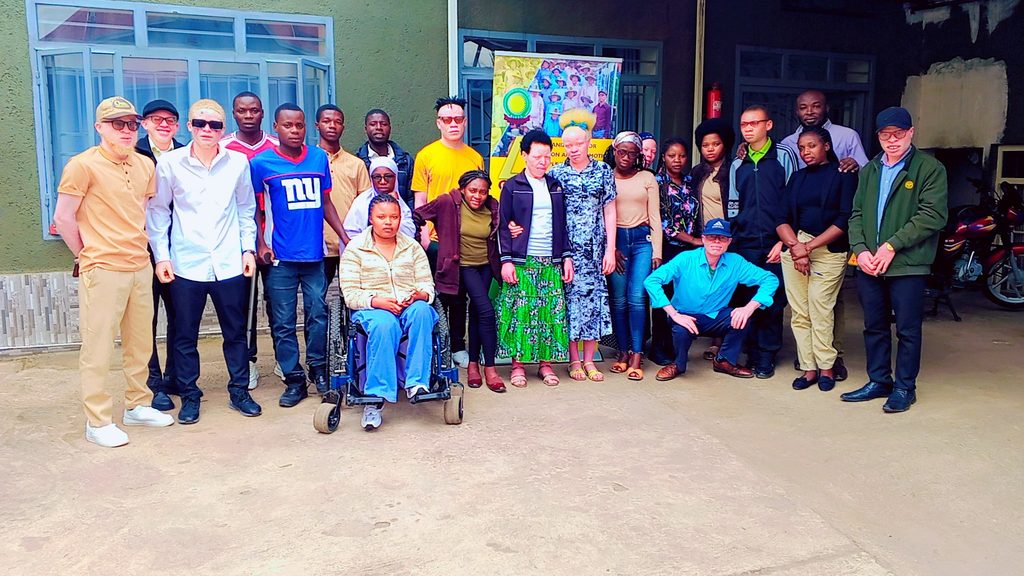
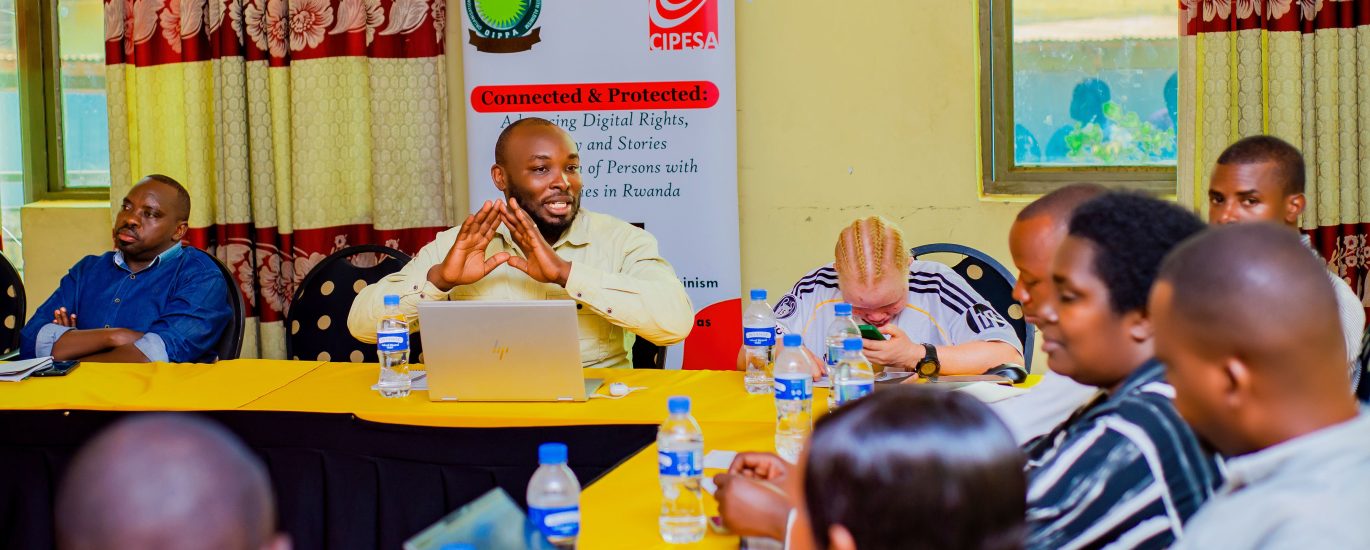
It is in this context that OIPPA is carrying out the "Connected & Protected" project in the context of the Africa Digital Rights Fund with support from the Collaboration on International ICT Policy for East and Southern Africa (CIPESA).